



By Sarah B. Ottow. Founder, Confianza + Author, The Language Lens for Content Classrooms
Collaboration between content teachers and multilingual learner/ESL educators doesn’t have to start with a perfect schedule, hours of shared planning time, or a formal co-teaching model.
It can start with one question: How can we use each educator’s expertise to strengthen students’ access to rigorous content, thinking, and language?
There are practical ways to do that before, during, and after instruction through a co-equal relationship.
🙌 Before instruction: Anticipate what students will need
Look together at an upcoming lesson, text, task, or assessment.
Teams can:
- Identify the language students will need to explain, justify, analyze, or discuss
- Anticipate language demands that could create barriers to the learning
- Plan language objectives, scaffolds, models, or discussion supports
- Review tasks and assessments for both content and language demands
➡️ During instruction: Use both educators intentionally
Rather than one educator teaching while the other “helps,” ask: What becomes possible for students because there are two of us?
Educators can:
- Facilitate different groups or parts of the learning
- Listen for student thinking and academic language use
- Provide in-the-moment feedback, modeling, or clarification
- Support more opportunities for students to talk, think, and participate
📈 After instruction: Learn from the evidence
Student talk and work can help teams determine what to do next. Together, educators can:
- Examine student work through both a content and language lens
- Distinguish between conceptual gaps and challenges expressing understanding
- Identify patterns that should inform upcoming instruction
- Decide which supports students still need and which can be released
💡 Start with one place
Effective collaboration doesn’t require doing all of this at once. Teams can choose one upcoming learning experience and identify where combining your expertise could make the biggest difference.
Collaboration isn’t necessarily about doing more. It’s about using the expertise already on your team more intentionally so more students can fully participate in rigorous learning.
One tip for students: At your next planning meeting, choose one upcoming task and ask: What language will students need to do the thinking this task requires—and how can each of us help make that possible?
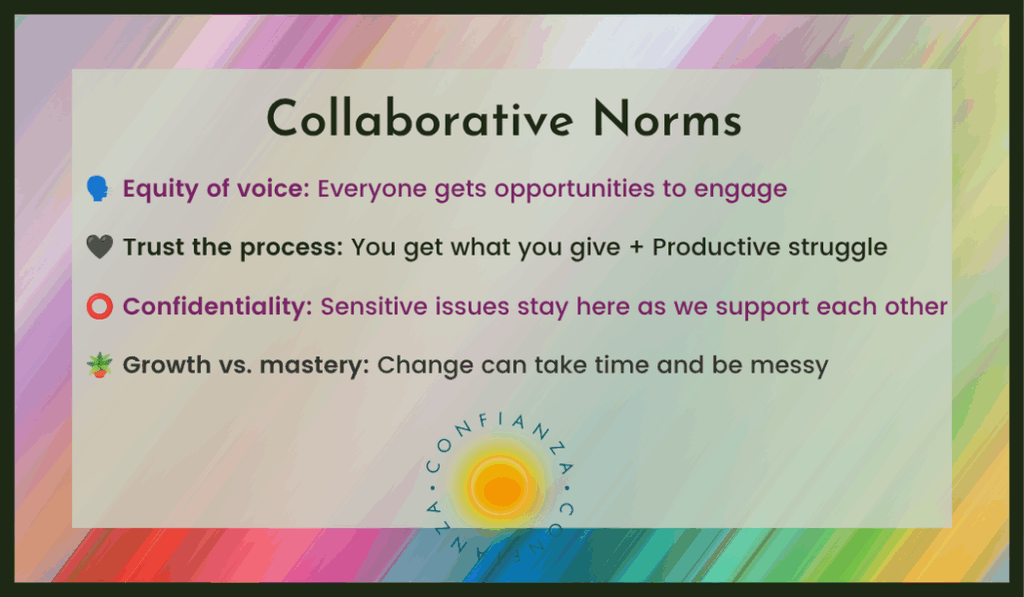
One tip for adults: Make sure you have clear, agreed upon collaborative norms. Reflect on them regularly and have group members self-assess and peer assess to stay on track! Here are some examples:
Bring the Language Lens™ to Your Team
Want to help your team maintain rigorous expectations while strengthening access for all learners?
The Language Lens™ gives educators a practical framework for seeing the language demands already embedded in learning and making purposeful shifts that increase access, engagement, discourse, and rigorous thinking.
Choose the level of support that fits your team:
- Team Book Bundle: Flexible, team-led learning + application for up to 25 educators
- Applied Book Study: Structured, module-by-module learning + application for teams of up to 25 educators ready to go deeper
Welcome!
At Confianza, our free article collection helps educators explore insights and tips to help you lead with clarity, and confidence—so you and your students, can reach your highest potential.

By submitting your email address, you agree to our Privacy Policy and Terms and Conditions.


